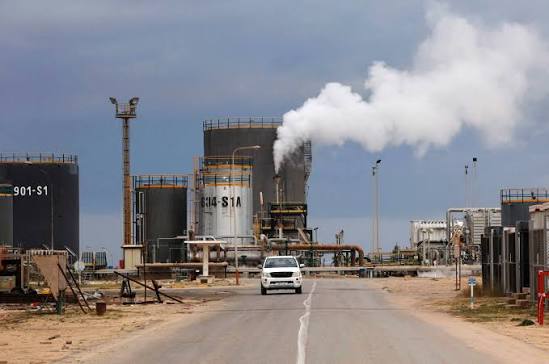
Libya could lose around 365,000 barrels per day (bpd) of crude production as a new pipeline closure at the Sharara oilfield adds to an ongoing disruption affecting the country’s western oil infrastructure. The National Oil Corporation (NOC) said on November 23 that the shutdown of a key pipeline valve could cut Sharara’s output by approximately 350,000 bpd, while a separate closure on the Hamada pipeline continues to affect another 15,000 bpd.
The combined losses would represent around 26% of Libya’s average crude production in October, when the country produced approximately 1.4 million bpd, according to NOC figures. The latest disruption raises fresh concerns about the reliability of Libya’s oil production and the country’s ability to maintain stable exports.
Sharara pipeline closure threatens major production losses
The NOC said an unauthorized group had closed a valve on the crude pipeline connecting the Sharara oilfield to the coastal export and storage facilities at Zawiya. The corporation described the action as unlawful and warned that it would significantly affect production at one of Libya’s most important oilfields.
Located in southwestern Libya, Sharara plays a major role in the country’s crude supply. Akakus Oil Operations manages the field through a joint venture involving the NOC and four international energy companies: Spain’s Repsol, France’s TotalEnergies, Austria’s OMV and Norway’s Equinor.
The field reached production levels of approximately 335,000 bpd in August. The NOC and Akakus have also discussed plans to increase output to around 355,000 bpd by mid-2027, highlighting the importance of maintaining stable operations as Libya pursues its longer-term production ambitions.
The latest closure also raises concerns about crude deliveries to Zawiya, which serves both the local refinery and export shipments. Any prolonged disruption could affect refinery operations and reduce the volume of crude available for international markets.
The incident follows another shutdown on the same pipeline in September, when an armed group closed a valve connecting Sharara to Zawiya. The disruption forced the NOC to take one of the refinery’s two processing units offline to maintain operations at the remaining unit. Crude flows resumed on September 26.
Hamada shutdown adds to Libya’s oil revenue losses
The Sharara disruption comes as the NOC continues to deal with a separate closure affecting the Hamada pipeline, which connects oilfields in western Libya to the Zawiya refinery.
An armed group shut the pipeline on October 30, interrupting crude deliveries from the Hamada and Al-Tahara fields. The NOC said on November 22 that the shutdown had already resulted in the loss of 302,778 barrels of crude, worth approximately $30.8 million.
The corporation estimated average losses of around 14,418 barrels per day during the first 20 days of the closure. These figures exclude fixed operating costs at the affected fields.
The Hamada pipeline shutdown has already cost Libya more than $30 million, adding further pressure on the country’s oil revenues.
With both disruptions continuing, Libya now faces a combined potential production loss of approximately 365,000 bpd. The NOC has called on the Petroleum Facilities Guard and relevant government authorities to intervene and restore operations at both pipelines.
The corporation also said it would pursue legal action against those responsible for the Sharara closure.
Repeated shutdowns threaten Libya’s production ambitions
The latest disruptions highlight the continued vulnerability of Libya’s oil sector to interference with critical infrastructure. Pipeline closures, protests and security-related incidents have repeatedly interrupted production since the 2011 uprising.
Oil remains the backbone of Libya’s economy and its main source of foreign currency. According to the NOC, crude production contributes approximately 90% of the country’s economic activity, making sustained interruptions particularly costly for public finances.
The scale of the latest disruption also comes at a difficult time for Libya’s oil industry, as the NOC seeks to increase production and attract international investment. The corporation has repeatedly highlighted its ambition to raise national output, with greater production capacity depending on reliable infrastructure and stable operating conditions.
For international oil companies operating in Libya, repeated disruptions also complicate production planning and long-term investment decisions.
The immediate priority remains reopening the Sharara and Hamada pipelines. However, the latest closures underline a broader challenge for Libya: increasing production will require not only investment in oilfields, but also consistent protection of the infrastructure that connects them to refineries and export terminals.