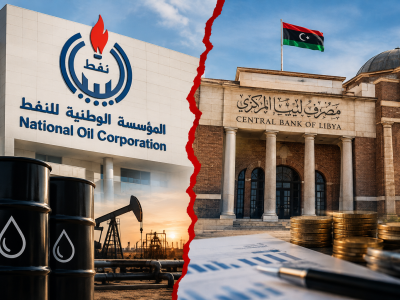
Libya’s oil sector continued its steady recovery in July, with crude production reaching 41.7 million barrels and revenues exceeding $2.2 billion. The latest figures highlight the National Oil Corporation’s ability to sustain output despite recent operational disruptions, while reinforcing the sector’s central role in Libya’s economy.
Libya’s National Oil Corporation (NOC) produced 41.7 million barrels of crude oil during July 2026, according to its latest monthly production and revenue report. The corporation also transferred $2.26 billion in oil revenues to the sovereign account at the Libyan Foreign Bank, underlining the sector’s continued importance as the country’s primary source of public income.
The latest production figures translate into an average daily output of roughly 1.35 million barrels per day, keeping Libya among Africa’s largest oil producers despite persistent political and operational risks.
July’s performance also comes shortly after production at the El Feel and Wafa oilfields resumed following temporary disruptions linked to protests around the Mellitah oil and gas complex. The swift recovery demonstrated the sector’s growing operational resilience and limited the impact on monthly production.
Stable Output Supports Libya’s Fiscal Position
Oil remains the backbone of Libya’s economy. The sector generates almost all export earnings and provides the overwhelming majority of government revenues. Strong production therefore has an immediate impact on public finances, foreign currency reserves, and the country’s ability to finance imports.
The July figures suggest that NOC continues to prioritize production stability while balancing maintenance programs across its upstream operations. Recent meetings between NOC management and operating companies have also focused on resolving technical bottlenecks, improving efficiency, and maintaining output across Libya’s major producing fields.
The steady flow of revenue also arrives at an important time for Libya, as policymakers seek to sustain economic growth while managing political uncertainty. Continued production above 1.3 million barrels per day strengthens the country’s fiscal position and provides additional confidence for international energy companies expanding their activities in Libya.
Focus Shifts Toward Higher Production
The July production report reinforces Libya’s longer-term ambition to increase crude output toward 1.6 million barrels per day over the coming years. NOC has accelerated investment in field rehabilitation, infrastructure upgrades, and new exploration activity to support that objective.
Although challenges remain, including aging infrastructure, security concerns, and periodic political disputes, recent production data indicates that Libya has improved its ability to restore operations quickly after disruptions.
For international oil markets, Libya remains one of the few major producers with meaningful capacity to increase supply without OPEC+ production constraints. As global demand continues to evolve and European buyers seek diversified crude supplies, maintaining stable production will remain a strategic priority for both Libya and its international partners.