Libya’s electricity crisis is no longer merely a recurring public service failure that returns every summer. It has become a trigger for escalation on the ground and a direct threat to the economy, as public anger shifts from traditional protests toward confrontations targeting critical energy infrastructure.
Civil unrest over grid failures has spread to road blockades, government headquarters and vital facilities, including the National Oil Corporation and the Mellitah complex. The escalation has now moved beyond a local service crisis.
It is also raising concerns in Europe, particularly in Italy, where officials have warned about the potential need to protect strategic energy infrastructure at a critical moment of institutional fragmentation.
In Tripoli, the threat has become tangible. Protesters from movements such as “Souq al-Jumaa Youth” recently moved beyond conventional rallies and built dirt barriers around vital administrative sites, including the Administrative Control Authority, the Ministries of Civil Service and Local Government, GECOL’s main control center and the Civil Aviation Authority.
By physically blocking these buildings, protesters have disrupted daily administrative activity across the capital.
The economic consequences extend well beyond inconvenience. Libya holds Africa’s largest proven oil reserves, yet daily hours-long power outages disrupt hospitals, close schools and constrain small businesses. Every hour without electricity creates direct financial losses through spoiled goods, stalled trade and the rising cost of operating private generators.
More importantly, the crisis continues to erode public confidence in the state’s ability to turn its natural-resource wealth into reliable basic services.
A Development Deficit
Public service delivery remains severely compromised across health, education, water and electricity, with regional disparities and rising poverty adding to the pressure.
At the same time, corruption, disputes over oil revenues and a fragile private sector continue to weigh on the economy.
Libya’s effective power-generation capacity has steadily declined since 2013, leaving the country able to cover only around two-thirds of peak demand. Subsidized electricity tariffs, rising demand, damaged transmission networks and chronic fuel-supply bottlenecks continue to drive recurring system failures.
Summer temperatures approaching 40°C expose these weaknesses. Air conditioners go offline, private generators struggle to cover household demand and deeper problems in energy governance become increasingly visible.
The paradox is striking: one of Africa’s largest oil producers continues to struggle to supply sufficient fuel to its own power stations. Years of conflict damaged energy infrastructure, while shortages of natural gas and heavy fuel constrain generation capacity.
A single breakdown in the western transmission network recently triggered a wider system collapse and disrupted primary water supplies to major urban centers.
The Economic Cost of Conflict
Political fragmentation continues to obstruct technical recovery. The divide between the UN-recognized Government of National Unity in Tripoli and the parallel authorities in the east prevents unified asset management and leaves energy governance fragmented.
Protests over unequal power rationing have increasingly evolved into disruptions targeting strategic infrastructure.
The spread of civil disobedience across areas including Tajoura and the western coast shows how quickly public anger can translate into pressure on critical infrastructure. The temporary shutdown of the Melita oil complex and disruptions to load-shedding controls highlight the fragile balance keeping the electricity system operating.
Protests targeting control centers and gas pipelines could trigger wider blackouts. This gives civic unrest the ability to disrupt national energy security almost as effectively as a military blockade.
The economic costs are already measurable.
The temporary shutdown of the Melita complex disrupted gas flows and associated oil production for hours, depriving the treasury of millions of dollars in potential revenue even after operations resumed.
Blockades of government offices and service institutions in Tripoli have also frozen official transactions and delayed payments, disrupting small and medium-sized businesses that depend on government processes.
Combined with prolonged power outages, road closures and the rising cost of private generators, each hour of unrest reduces economic output and further undermines investor confidence in an already fragile, oil-dependent economy.
UN Support Mission in Libya assessments have repeatedly highlighted the link between governance failures and weak public-service delivery. Economic discussions supported by the UN have also identified Libya’s dependence on oil, high recurrent spending and weak transparency as structural problems.
Fuel Subsidies and the Black Market
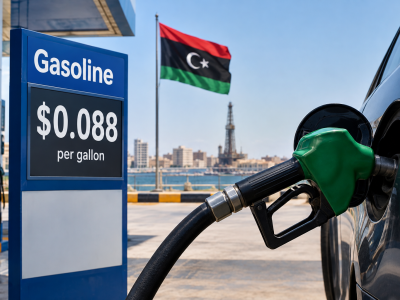
Fuel subsidies have become a major source of economic leakage. UN briefings to the Security Council, citing Libya’s Audit Bureau and Anti-Corruption Commission, reported a 203% increase in diesel consumption allocated to electricity generation, with much of the additional consumption unaccounted for.
Smuggling networks are estimated to divert billions of dollars in fuel over multi-year periods. Money that could finance grid modernization, healthcare or other public infrastructure instead disappears into illicit supply chains.
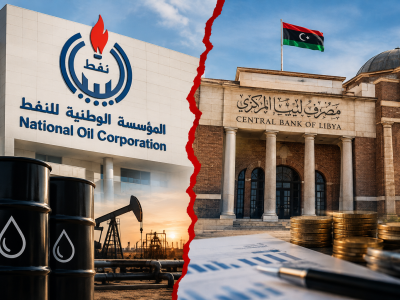
Political disputes over the Central Bank and the allocation of oil revenues also regularly threaten production and exports, placing additional pressure on public finances and reducing the resources available to maintain basic services.
The Audit Bureau has documented resistance within the General Electricity Company of Libya (GECOL) to external audits, including concerns over procurement practices and delayed financial reporting. Tens of billions of dinars continue to flow into the company, yet the grid remains unstable and many power plants operate well below their designed capacity.
The failure to connect some plants to nearby natural gas supplies also forces Libya to rely on more expensive liquid fuels. In some cases, the country burns crude oil for power generation, sacrificing export revenue in the process.
These weaknesses create profitable opportunities for informal networks. Armed groups and local actors can exploit prolonged blackouts by selling fuel and private-generator services on the black market. At the same time, patronage-based hiring can consume GECOL resources that would otherwise go toward maintenance and system upgrades.
The disruption does not stop with the electricity sector. Physical closures of state entities, telecommunications companies, airport authorities and ministries can freeze administrative workflows and disbursements, adding another layer of pressure on local businesses.
Electricity as a Test of Governance
Libya continues to lag regional peers in governance, corruption control and utility reliability. But the electricity crisis has now moved beyond a problem that authorities can address through temporary fixes or additional budget allocations.
Power supply has become a test of whether Libya’s institutions can exercise effective control and manage the country’s oil wealth.
The question is no longer simply whether Libya can generate enough electricity during the summer.
It is whether the state can secure critical energy infrastructure, control fuel flows, manage public funds and maintain essential services despite political fragmentation.
Until Libyan institutions can address those structural weaknesses, the electricity crisis will remain more than a failure of public services. It will continue to constrain economic recovery, weaken investor confidence and expose the wider fragility of the country’s energy system.