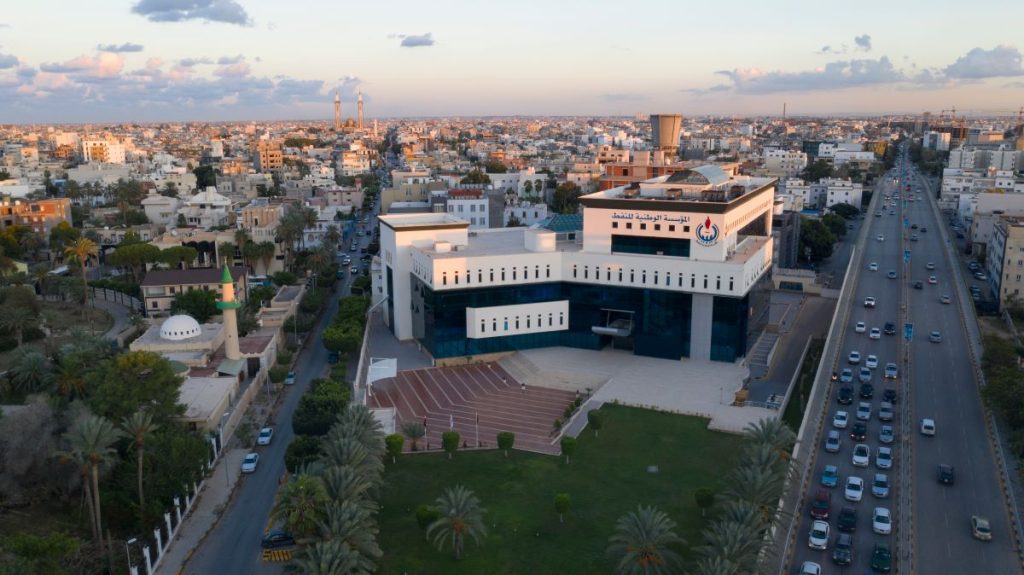
Libya’s oil revenue increased in September despite a drop in crude production, highlighting the strength of oil prices and the continued importance of stable exports to the country’s finances. The National Oil Corporation (NOC) reported about $2.86 billion in oil sales for the month, up from $2.55 billion in August.
The NOC said Libya produced 40.23 million barrels of crude in September, compared with more than 43.3 million barrels in August. That puts average production at around 1.34 million barrels per day, down from about 1.40 million bpd in August.
The rise in revenue therefore did not come from higher production. Higher oil prices played the bigger role. The average Brent price used in the NOC’s September calculations reached about $90.84 per barrel, compared with $83.41 in August.
Higher prices offset lower production
The September figures show the advantage Libya gets when prices rise, but they also underline the risk of relying so heavily on one commodity.
Libya remains highly exposed to changes in the international oil market because crude sales provide the overwhelming share of state revenue. A stronger price can quickly lift government income even when production falls, while a sharp decline in prices can have the opposite effect without any change in output.
September also shows how disruptions inside Libya can affect the production side of the equation. Oil flows from the Sharara field to the Zawiya refinery were interrupted during the month after the closure of a key pipeline valve. The NOC said the shutdown caused more than $75 million in losses before flows resumed.
That disruption came at a time when Libya was already trying to maintain production at a relatively high level. Protecting pipelines, fields and export infrastructure therefore remains just as important as attracting investment into new production.
Revenue remains strong, but stability matters
The NOC said the $2.86 billion September revenue was transferred to the sovereign account at the Libyan Foreign Bank. It also reported 2 billion Libyan dinars in royalties and concession-contract taxes transferred to the Ministry of Oil.
Libya exported 27.57 million barrels during the month, while 3.32 million barrels went to refineries. Another 6.03 million barrels were available for export at the end of September. Natural gas production reached 76.01 billion cubic feet, with 57.16 billion cubic feet consumed.
The numbers offer some reassurance about Libya’s ability to generate foreign currency, but they also point to a larger challenge. Higher prices can support revenue in the short term, yet sustained economic improvement requires reliable production and exports, stronger refining capacity and better use of the income generated by the oil sector.
For Libya, the immediate outlook remains closely tied to both the international oil market and the ability to keep domestic disruptions from cutting into production. September showed that stronger prices can cushion a production decline. The bigger test will be whether Libya can maintain stable output while making the investment needed to increase production over the longer term.