The Green Economy Emerges as a New Development Model
The concept of the green economy is no longer a mere intellectual exercise or a slogan bandied about at international conferences, it has become one of the most important paths that countries are striving to adopt to confront the growing economic and environmental challenges.
The world today is experiencing a phase where issues of economic growth intersect with climate change, scarcity of natural resources, and rising energy costs. This has prompted governments and the private sector to search for a new development model that achieves a balance between the demands of development and environmental preservation. Hence, the concept of the green economy has emerged as a vision that seeks to achieve economic growth without depleting resources or harming the rights of future generations.
The green economy is based on a seemingly simple idea, yet one with profound implications: economic development should not come at the expense of the environment.
For decades, traditional economic activities have relied on the intensive consumption of fossil fuels and natural resources, leading to increased carbon emissions, air and water pollution, and a decline in biodiversity. As the effects of these practices have intensified, a global conviction has begun to emerge that continuing growth according to the traditional model will lead to greater economic and social burdens than gains.
Green Investment, Energy Security, and Economic Growth
The shift to a green economy does not mean abandoning industry or reducing production, but rather redirecting investment towards more efficient and sustainable sectors, such as renewable energy, clean transportation, sustainable agriculture, waste management, and the circular economy.
These sectors not only contribute to environmental protection but also create new job opportunities, foster innovation, and open promising markets for companies and entrepreneurs. Numerous experiences have demonstrated that investment in clean technologies has become an engine for economic growth. Countries that invested early in solar and wind energy not only achieved environmental gains but also succeeded in building new, highly competitive industries, attracting substantial investments, and creating thousands of jobs in engineering, manufacturing, maintenance, and scientific research.
These investments also contributed to reducing dependence on imported fuels, enhancing energy security, and mitigating global price volatility.
However, the transition to a green economy is not without its challenges.
The initial cost of the transition can be high, especially for developing countries facing financial pressures and urgent development needs. Upgrading infrastructure, developing electricity grids, and rehabilitating outdated industries require substantial investments that not all countries can easily provide.
This is compounded by a shortage of technical expertise, limited access to green finance, and the absence of legislative frameworks that encourage investment in this sector.
Managing the Transition in Resource-Rich Economies
Another challenge is the concern about the impact of this transition on some traditional sectors, particularly those related to fossil fuels.
Major economic shifts are often accompanied by changes in the nature of the labor market, with some jobs disappearing and new ones emerging that require different skills.
Therefore, the success of the green economy depends not only on technology but also on the ability of governments to prepare and equip their workforce to adapt to the coming transformations.
In this context, the importance of public policies in leading the transition becomes clear. Governments are required to enact clear legislation that encourages investment in environmentally friendly projects, provide appropriate tax incentives and financing, and support scientific research and innovation. Furthermore, partnerships with the private sector must be strengthened, as governments alone cannot finance or implement this transition on the required scale.
When the roles of public institutions, businesses, and universities are integrated, achieving the goals of the green economy becomes more realistic.
For countries rich in natural resources, a green economy does not mean abandoning these resources, but rather managing them effectively and investing their revenues in building a more diversified economy.
Oil-producing countries, for example, can utilize their current revenues to finance renewable energy projects, develop manufacturing industries, and invest in technology and education.
In this way, natural wealth transforms from a temporary source of income into a foundation for sustainable development.
Libya’s Opportunity in the Green Economy Transition
Libya is one of the countries with promising opportunities in this area.
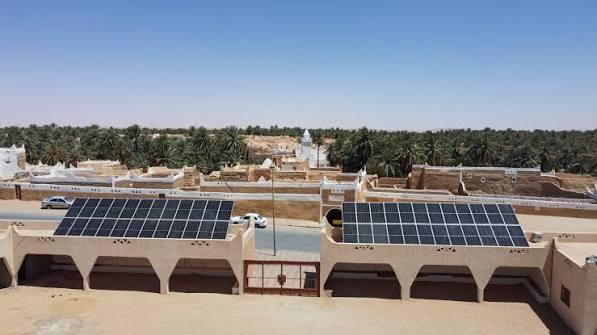
In addition to its large oil reserves, the country enjoys a unique geographical location, some of the highest sunshine hours in the world, and vast areas suitable for solar energy projects.
If these assets are properly utilized, Libya can produce clean electricity in large quantities, reduce fuel consumption in power plants, and potentially export energy to regional markets in the future. This transformation can also contribute to revitalizing local industries and creating job opportunities for young people in the fields of technology, engineering, and maintenance.
However, achieving this vision requires a stable institutional environment, long-term strategic plans, and effective project management.
Natural resources alone do not create development. Sound policies, strong institutions, and the ability to translate ideas into actionable programs drive sustainable economic transformation.
Therefore, investing in human capital is no less important than investing in infrastructure, because the success of any economic transformation ultimately depends on people capable of innovation, management, and development.
Building a Sustainable Economic Future
It is also crucial to raise public awareness of the importance of the green economy.
Citizens are not merely beneficiaries of environmental policies, but partners in their success. Conserving energy, reducing waste, recycling, and choosing more efficient transportation are all seemingly simple individual practices that have a significant cumulative impact when they become part of the general culture.
Educational institutions and the media play a pivotal role in establishing this culture and fostering a sense of responsibility towards the environment. The green economy should not be viewed as a choice between development and the environment. Rather, it serves as a model that achieves both.
International experience confirms that countries investing in sustainability not only protect their natural resources but also build more competitive economies better prepared to face future crises.
While the path to a green economy is not easy and requires comprehensive investments, reforms, and legislation, the cost of delaying this transition may be far greater than the cost of initiating it.
Therefore, the green economy is not merely a vision for the future, but a necessity imposed by the challenges of the present, and a genuine opportunity to build more stable, equitable, and sustainable economic development for current and future generations.