Libya is trying to turn one of Tripoli’s longest-delayed development projects into a functioning commercial hub, with the Zumurrud Mall project now under renewed government scrutiny as construction moves toward completion.
A follow-up meeting this week brought together government officials, Zumurrud Company, international project consultant Hill International and the Reg Libya construction consortium to review the project’s progress, remaining designs, external supplies and implementation schedule. The government also called for an operational plan and training programme for Libyan staff ahead of the project’s eventual opening. The bigger story, however, is what Zumurrud could mean for Libya’s economy if the project finally moves from construction plans to commercial activity.
From stalled project to economic platform
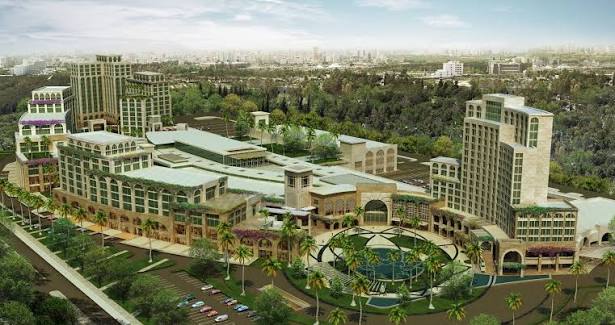
Zumurrud is not simply another shopping center. The development covers 15 hectares and forms part of the wider Bab Tripoli 2 project. Plans include a large shopping mall, administrative offices, a five-star hotel and space for investors and developers.
The project’s official website describes the mall as a 135,000-square-metre development with more than 500 stores, restaurants and entertainment facilities, alongside office towers and a five-star hotel. Hill International, which provides project management consultancy, estimates that the wider development could create around 3,000 jobs.
That matters because Libya needs more economic activity outside the public sector.
A major commercial complex can create demand across several parts of the economy at once: construction, retail, hospitality, logistics, property management, professional services and tourism. It can also give local businesses a physical platform to expand and give international companies a reason to consider Tripoli as a commercial market.
The economic impact therefore extends well beyond the rent collected from shops.
The financing model could matter even more
One of the most interesting aspects of Zumurrud is its financing structure. The Tripoli government describes the project as a model for an investment partnership funded outside the general budget. That approach could prove important for Libya, where the state remains heavily dependent on oil revenues and public spending continues to dominate economic activity.
The Libyan Investment Authority previously backed the wider Tripoli Gate development through an investment agreement with the Libyan Development and Investment Company. The project now involves Zumurrud Company, LIDCO and foreign partners including Turkey’s Renaissance and Jawahir, with Hill International providing project management consultancy.
This structure offers a potential model for reviving other stalled assets without relying entirely on direct government spending That is where Zumurrud could become more significant than its headline value as a mall.
If Libya can demonstrate that state-linked investment institutions, local companies and international partners can work together to complete a major commercial development, other dormant projects could become easier to finance and restart.
Libya needs projects that generate economic activity
Zumurrud has been a long-running symbol of Libya’s difficulty in completing major developments.
The project dates back to 2010 but halted after the 2011 conflict. A previous attempt to restart construction came in 2021, while the government relaunched the project again in March 2025 with a 17-month completion target. That deadline falls in August 2026, making the latest progress review particularly important. The latest meeting suggests that officials still need to resolve implementation issues, including supplies, remaining designs and operational preparations.
That makes execution the real economic test. Libya does not lack large development concepts. It lacks a consistent record of turning those concepts into functioning assets.
If Zumurrud reaches completion and attracts retailers, investors, hotel guests, businesses and consumers, it could demonstrate that Libya can convert dormant capital into productive economic infrastructure.
For a country seeking to diversify beyond oil, that would be a far more important achievement than opening another shopping mall.