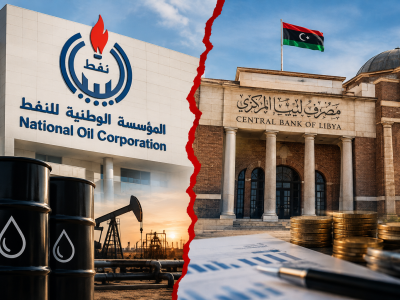
The Central Bank of Libya Central Bank of Libya and US charge d’affaires Jeremy Berndt co-sponsored a high-level meeting on Friday to launch Libya’s unified financial spending agreement. The governor of the Central Bank attended alongside key Libyan stakeholders, marking a formal shift from negotiation to implementation.
The meeting focused on one of Libya’s most sensitive economic issues: how authorities allocate and spend oil revenues across divided institutions.
Move Toward Unified Fiscal Management
Libya continues to face deep challenges in public finance management. Since 2011, competing political authorities have run parallel spending systems between east and west. This split has complicated budgeting, weakened oversight, and strained service delivery.
Oil revenues dominate state income. Different authorities have often disputed control over how to spend them. The new agreement aims to end this fragmentation.
It introduces a single framework for public spending across all institutions. Officials expect this to improve coordination and reduce duplication in state expenditure.
Central Bank Reunification Sets the Stage
The reunification of the Central Bank in 2023 created the institutional base for this reform. Before that, rival branches in Tripoli and the east operated separately. That structure limited the Central Bank’s ability to enforce consistent fiscal rules.
Now, a unified Central Bank structure supports a unified spending framework. This allows tighter coordination between revenue collection and public expenditure decisions.
US Support Signals International Backing
The United States played a visible role in launching the agreement. Washington has pushed for stronger fiscal governance in Libya and sees financial transparency as key to long-term stability.
US officials argue that unified spending reduces political competition over oil revenue. It also improves conditions for international cooperation, investment, and development financing.
For external partners, a single fiscal system makes Libya easier to engage with. It also strengthens confidence in the country’s financial institutions.
Economic Impact and Remaining Risks
If Libya implements the agreement effectively, it could strengthen fiscal discipline. A unified system would improve transparency, reduce waste, and clarify accountability for public funds.
It would also support monetary stability. The Central Bank can manage liquidity and exchange rates more effectively when it operates under a single national spending framework.
For citizens, the reform could improve consistency in salaries, services, and infrastructure spending. Today, access to state resources often depends on geography and political alignment.
Still, execution remains the main risk. Libya has seen several agreements stall due to political tensions and shifting alliances. Broad participation in Friday’s meeting signals momentum, but long-term success depends on sustained commitment from all sides.
Step Toward Broader Economic Reform
The launch of the spending agreement aligns with wider economic reform discussions in Libya. Recent engagement with international partners, including the World Bank and US officials, reflects growing attention to governance and economic restructuring.
The outcome of this agreement will likely shape Libya’s fiscal stability for years ahead. If institutions enforce it consistently, it could mark a turning point in how the country manages its oil wealth and public finances.