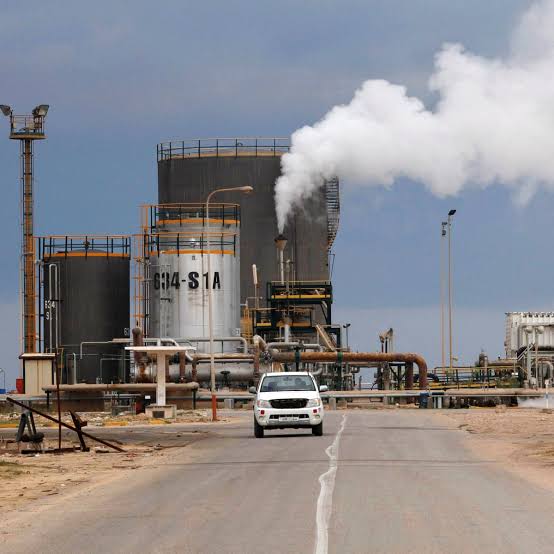
The first shipment of Libyan crude has arrived at Georgia’s Kulevi refinery, giving Libya a new foothold in a European energy supply chain reshaped by sanctions on Russian oil.
Black Sea Petroleum (BSP), which operates the Kulevi refinery, began unloading the Libyan cargo after the tanker Kriti Legend arrived from Libya on August 28, according to Georgian business publication BMG. The shipment follows BSP’s decision to replace Russian crude with supplies from Kazakhstan and Libya. The shift is directly linked to European Union sanctions. In July, the EU’s 21st sanctions package targeted the Kulevi refinery because of its processing and trading of Russian crude. The transaction restrictions were given a six-month delay, allowing the refinery time to move away from Russian oil. For Libya, the development matters beyond one refinery.
Russian Oil Creates Openings
Kulevi began processing Kazakh crude in July as part of its diversification plan. BSP had already signed a crude supply agreement with an international trading company on July 3 for Libyan oil, with the contract running through the end of 2027 and including an extension option.
The refinery has now completed its switch to non-Russian crude. BSP said it began processing exclusively non-Russian feedstock from August 24, before the Libyan cargo arrived.
The scale is still modest. S&P Global reported that Kulevi processed about 650,000 metric tons of crude during the first half of 2026, while the refinery has an initial capacity of around 1.2 million tons per year, equivalent to roughly 24,000 bpd.
But the commercial signal is more important than the immediate volume. European sanctions are forcing refiners and traders that previously relied on Russian barrels to look for alternative crude. Libya is well placed to benefit because of its proximity to European markets and its growing production capacity.
Libya Already Has a Strong European Market
Italy shows how important this relationship already is. Libya was Italy’s largest crude supplier during the first four months of 2026, providing around 5 million tons, or 26.8 percent of Italy’s total crude imports, according to data from the Italian Energy for Mobility Union (UNEM). Libyan crude imports into Italy rose 13 percent from the same period a year earlier.
That gives Libya an advantage as European buyers reduce their exposure to Russian oil. Its barrels do not have to travel across long supply routes to reach Mediterranean refineries, and several European refineries are already familiar with Libyan grades. The Kulevi agreement adds another route for Libyan crude into Europe’s wider energy system. Georgia is not an EU member, but the refinery is changing its feedstock specifically because access to European markets has become harder for facilities processing Russian crude.
More Buyers Could Follow
The bigger question is whether Kulevi becomes an isolated deal or part of a wider shift. The EU has continued tightening restrictions on Russian energy, while refiners and traders are adjusting their supply chains. The bloc’s latest sanctions package specifically expanded restrictions on refineries in third countries that process Russian crude.
That creates an opening for suppliers with reliable production and short shipping routes into Europe. Libya still has its own constraints: political instability, infrastructure problems and periodic disruptions can make buyers cautious about depending too heavily on Libyan supply. The country also needs to sustain higher production and export volumes if it wants to turn rising European demand into a larger and more reliable source of oil revenue.
For now, the Kulevi shipment is a small transaction in the global oil market. But it shows how sanctions designed to push Russian crude out of European-linked supply chains can redirect demand toward other producers, and Libya is one of the countries positioned to capture part of that business.