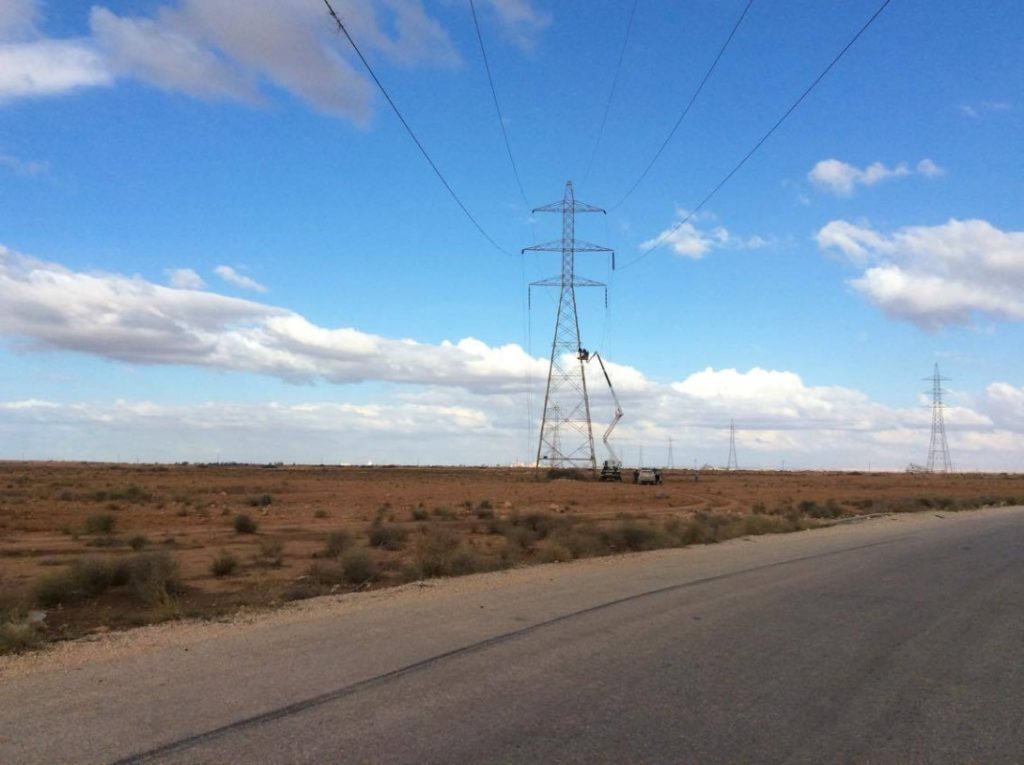
A major technical fault on a key transmission line in Benghazi triggered widespread electricity disruptions across eastern Libya, once again exposing the vulnerabilities of the country’s aging power infrastructure and the challenges facing grid stability.
The General Electricity Company of Libya (GECOL) announced that a malfunction on the 220 kV North Benghazi New–North Benghazi Old Circuit No. 1 caused a sudden separation between Libya’s eastern and western electricity networks. The fault led to the shutdown of generating units across eastern Libya and disrupted power supplies in several areas.
According to GECOL, the incident also activated automatic protection systems in the western network. As a result, several units at the Misrata Combined Cycle Power Plant temporarily went offline as the system moved to prevent wider damage and maintain overall grid stability.
Technical teams responded immediately after the outage. GECOL confirmed that generating units at both the Misrata power station and the North Benghazi power station had already resumed operations, while engineers continued efforts to restore the network and reconnect affected infrastructure in a phased manner.
The disruption comes at a time when Libya is preparing for the summer peak demand season, traditionally the most challenging period for the country’s electricity sector. Rising temperatures typically increase pressure on generation capacity and transmission networks, making grid reliability a critical issue for households, businesses, and industrial facilities.
While authorities moved quickly to contain the latest outage, the incident underscores the importance of continued investment in transmission infrastructure. Libya’s electricity system relies on an interconnected network that links generation centers across different regions. A fault on a major transmission corridor can therefore create cascading effects that extend far beyond the original point of failure.
The blackout also follows a series of electricity-related disruptions recorded in eastern Libya over recent years. In May 2025, a separate technical failure involving a high-voltage transformer in Benghazi caused a complete blackout across the eastern region, highlighting recurring concerns over network resilience and equipment reliability.
For Libya’s economy, reliable electricity remains essential to supporting industrial activity, commercial operations, telecommunications, healthcare services, and oil sector infrastructure. Frequent outages increase operational costs for businesses and reinforce the need for modernization projects that strengthen both generation and transmission capacity.
GECOL says its control and operations teams continue to monitor the network around the clock and coordinate with power stations across the country to ensure a safe and orderly restoration process. The company expects the electrical system to gradually return to normal operating conditions as recovery efforts continue.