Libya and Morocco have signed a new memorandum of understanding aimed at strengthening trade and investment cooperation, adding momentum to growing economic engagement between the two North African countries.
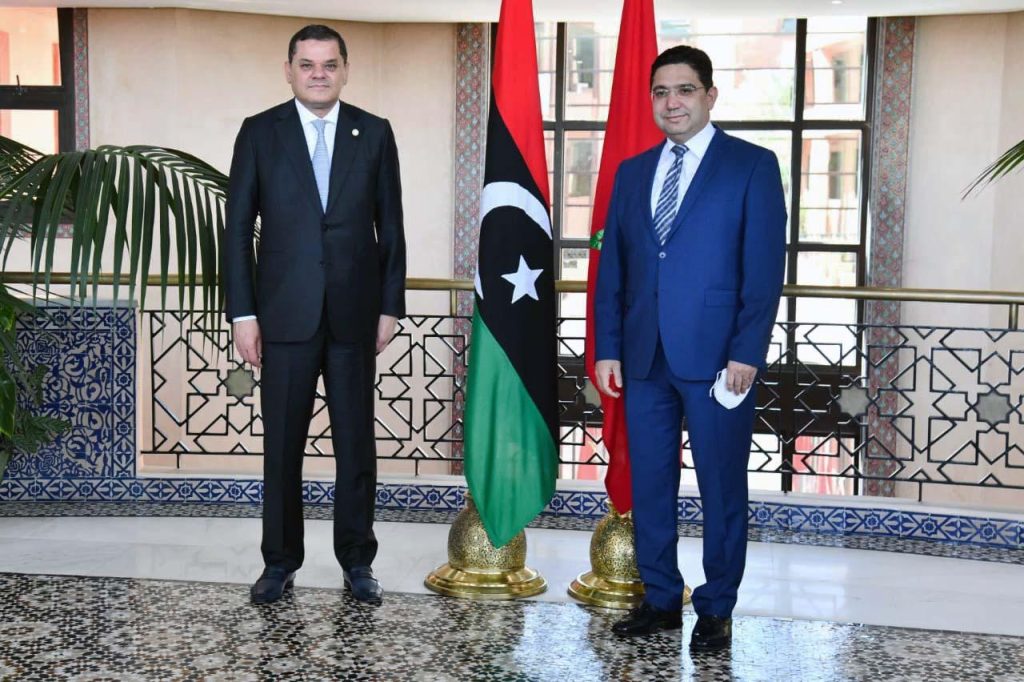
The agreement, signed in Rabat between Libya’s Export Development Authority and Morocco’s Agency for Investment and Export Development, focuses on expanding export promotion, encouraging investment flows, supporting businesses, and increasing economic exchanges between the two markets. The framework also includes cooperation on market research, training programs, trade missions, exhibitions, and the exchange of economic data and expertise.
The deal arrives at a time when Libya seeks to diversify its economic partnerships beyond the oil sector while attracting greater foreign investment into infrastructure, logistics, manufacturing, and trade-related industries.
A Growing Economic Dimension
Although political relations between Libya and Morocco have often attracted attention due to Morocco’s role in facilitating Libyan political dialogue, economic cooperation has received less focus. The latest agreement suggests both countries want to expand commercial ties and create more opportunities for private-sector engagement.
Morocco has positioned itself as one of North Africa’s leading investment and export hubs. Through its national investment promotion agency, the country has actively sought to attract foreign investors while expanding trade links across Africa, Europe, and the Middle East.
For Libya, the partnership offers access to Moroccan expertise in export promotion, industrial development, logistics, and investment attraction. It also aligns with Libya’s wider efforts to strengthen economic institutions and improve the country’s appeal to regional and international investors.
Why the Agreement Matters
The significance of the MoU extends beyond trade promotion. Libya has increasingly pursued economic partnerships with regional countries in recent months as officials seek to support reconstruction projects and attract new investment into strategic sectors.
Large-scale investment initiatives, including projects linked to free zones, infrastructure, and energy development, have become central to Libya’s economic strategy in 2026. Recent agreements with international partners demonstrate a growing effort to position Libya as a destination for long-term capital and commercial activity.
Morocco could play an important role in this effort. The country serves as a gateway between Africa and European markets and has developed strong capabilities in automotive manufacturing, logistics, renewable energy, agribusiness, and export-oriented industries. Greater cooperation could help Libyan companies gain access to new markets while creating opportunities for Moroccan firms interested in Libya’s reconstruction and development sectors.
Reviving Maghreb Economic Integration
The agreement also highlights a broader regional trend. Economic integration across the Maghreb has historically lagged behind other regional blocs despite the geographic proximity of Libya, Morocco, Algeria, Tunisia, and Mauritania.
Trade experts have long argued that stronger commercial links between Maghreb countries could unlock significant economic opportunities by reducing barriers to investment, improving supply chains, and increasing intra-regional trade. Existing regional investment frameworks already provide a basis for deeper cooperation among several North African states, although implementation has often remained limited.
Against this backdrop, the Libya-Morocco agreement could serve as a practical step toward expanding business cooperation regardless of broader political challenges facing the region.
Outlook
The success of the agreement will ultimately depend on implementation. Trade missions, business forums, investment projects, and direct private-sector partnerships will determine whether the MoU produces measurable economic results.
However, the agreement reflects a clear trend. Libya is seeking stronger economic relationships across North Africa while positioning itself as a more active participant in regional trade and investment networks. For Morocco, deeper engagement with Libya offers access to a market with substantial reconstruction needs and significant long-term growth potential.
As Libya continues to pursue economic diversification and investment-led development, partnerships such as this may become an increasingly important part of the country’s economic strategy.