Libya and the Strait of Hormuz: The Oil Price Opportunity and Its Risks
On the surface, there appears to be no direct link between Libya and the Strait of Hormuz. Libya exports its oil from Mediterranean ports, whereas the Strait of Hormuz is located in the Gulf, between Iran and the Sultanate of Oman. However, oil markets pay little heed to geographical distances. Libyan oil enters the same global market influenced by events in the Gulf; thus, the impact of any major disruption in Hormuz can reach Tripoli, not through an oil tanker traversing the strait, but through the price mechanism.
This presents an economic paradox worth noting: a crisis in Hormuz might be good news for Libya’s budget in the short term, yet it could turn into bad news for the global economy and consequently for Libya’s own economy should it escalate into a long term shock.
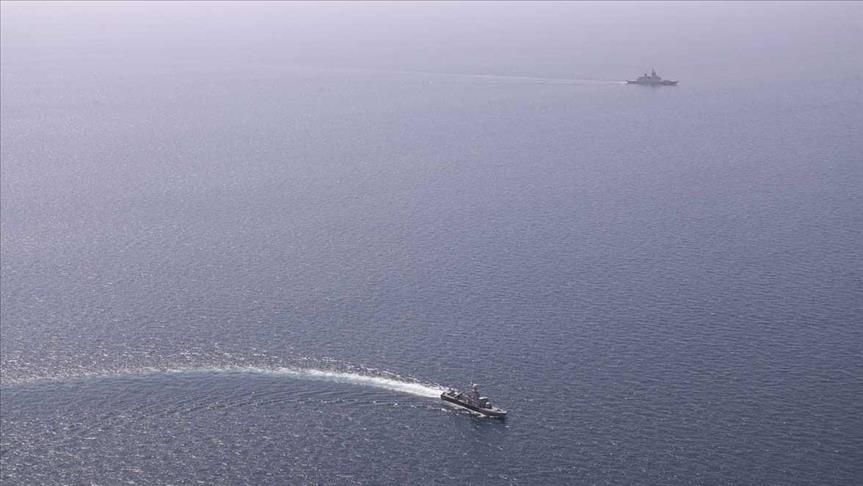
The Strait of Hormuz is more than just a narrow maritime passage on a map. According to the latest data from the U.S. Energy Information Administration, approximately 20.9 million barrels per day of oil and petroleum liquids passed through the strait in the first half of 2025. This volume represents nearly 20% of global consumption of these products and about a quarter of global maritime oil trade. Furthermore, significant volumes of global liquefied natural gas trade, much of it originating from Qatar, pass through the strait.
Consequently, the importance of Hormuz to the oil market stems not only from the volume of oil passing through it but also from the difficulty of quickly replacing those supplies in the event of a closure or major disruption. Existing pipeline alternatives can accommodate only a portion of the flow.
This is where Libya’s story begins.
When Hormuz Moves Oil Prices
The Libyan economy is heavily dependent on oil. The International Monetary Fund emphasizes that Libya’s economic outlook remains dominated by developments in the oil sector, and that heavy reliance on oil exports leaves the economy vulnerable to global economic and geopolitical shifts.
This implies that Libya could be affected by a Strait of Hormuz crisis, even if operations at its own oil terminals remain unchanged.
If disruptions in the Strait reduce global market supplies, concerns regarding availability would naturally rise, potentially driving up oil prices. In such a scenario, Libya could generate higher revenues from selling the same volume of oil.
In other words, provided Libyan oil continues to flow from fields to terminals and port operations remain normal, a rise in global prices could boost revenues without requiring Libya to increase production.
This highlights an advantage for Libya as an oil producer facing a crisis occurring far from its borders.
However, this scenario is not necessarily sustainable in the long run.
Why Higher Oil Prices Are Not Enough
It is easy to view rising oil prices as positive news for an exporting nation like Libya. Yet, the economic reality is far more complex.
If the disruption at the Strait of Hormuz escalates into a widespread, protracted crisis, transportation and insurance costs could rise, global trade and supply chains could be disrupted, and energy importing economies could face inflationary pressures.
More importantly, sustained high energy prices could stifle global economic growth. Should the global economy enter a period of sharp slowdown, demand for oil could subsequently decline. Here, Libya might shift from benefiting from high prices to facing a different problem: a surge in oil prices driven by a geopolitical crisis may prove unsustainable if that same crisis weakens the global economy and dampens energy demand.
This is not merely a theoretical hypothesis. The International Monetary Fund has already noted Libya’s vulnerability to global risks, stemming from its heavy reliance on oil exports and a high import bill, and warned that adverse global economic and geopolitical developments could put pressure on oil prices.
Libya does not route its oil through Hormuz, but it is affected by the market.
This is perhaps the most crucial point in understanding the relationship between Libya and the Strait.
Libyan oil does not need to pass through the Strait of Hormuz to be affected by events there. Libya sells its oil in a unified global market, where prices are shaped by the balance of supply and demand, as well as geopolitical risks across various production and transit regions.
Consequently, the Strait of Hormuz can be described as an indirect influence on the Libyan economy.
If supplies from the Gulf are disrupted, oil becomes scarcer or more expensive on the global market, and risk premiums are repriced. If the price of Brent crude rises, the value of Libyan oil can rise as well.
However, there is another critical aspect: Libya is not merely an oil selling nation; it is also a nation that spends the resulting revenues.
This is where the vulnerability lies.
The state may generate extra revenue when oil prices rise, but the real question is what happens to that revenue once it is received. It could be invested in infrastructure, used to develop the oil sector and boost production capacity, or directed toward improving electricity, transport, and water services. It could also support sectors capable of creating jobs outside the oil industry. The alternative is for higher revenues to simply translate into increased public spending.
This question is more significant than the price of oil itself.
The International Monetary Fund projects that Libya’s fiscal position will remain under pressure due to high government spending, emphasizing that economic diversification away from oil and public finance reform are essential to mitigating risks.
Consequently, while a rise in oil prices driven by an external crisis might provide Libya with additional fiscal space, it does not resolve the economy’s structural issues.
The European Paradox
There is another dimension that makes this issue particularly important for Libya: Europe.
The majority of Libya’s oil exports are destined for Mediterranean and European markets, giving the country a distinct geographical advantage over Gulf producers. Should a major disruption occur in the Strait of Hormuz, European markets might reassess their strategies regarding supply security and energy sources.
This could elevate the importance of producers located closer to the European market, Libya included.
Yet geographical location alone is not enough.
For Libya to capitalize on this advantage, its production must be stable, its ports capable of handling exports, its oil facilities operating efficiently, and the institutions overseeing the sector able to maintain the flow of exports.
This is a critical point, as the history of Libya’s oil sector demonstrates that domestic risks can be just as impactful as external ones. In 2024, for instance, oil related disruptions contributed to a decline in economic activity, before production subsequently recovered to approach 1.4 million barrels per day in the spring of 2025, according to the International Monetary Fund.
In other words, Libya could face a paradox: rising global prices coinciding with falling domestic production.
In such a scenario, the country might miss the opportunity to fully benefit from the price surge.
What if the Crisis Drags On?
That changes the equation entirely.
A short lived crisis in the Strait of Hormuz might lead to higher prices and relative gains for oil exporting nations.
A prolonged crisis, however, could mean increased transport and insurance costs, trade disruptions, rising inflation, and a slowdown in global growth, potentially even altering patterns of demand for oil and energy.
In this case, Libya would not be fully insulated simply by virtue of being an oil producer. On the contrary, its heavy reliance on a single sector makes it highly vulnerable to shifts in global market trends.
This is why the issue of the Strait of Hormuz should not be viewed from a single angle, namely how high oil prices might climb.
The more crucial question is: what would happen to the global economy if the disruption persisted?
Economically and politically, a brief spike in oil prices differs significantly from a surge driven by a protracted crisis that threatens global trade.
The Libyan Lesson from Hormuz
Perhaps the most important lesson Libya can draw from any oil market crisis is that it once again exposes the fragility of relying on a single source of income.
Libya may benefit from rising oil prices, yet it has no control over the causes of that rise. It might generate higher revenues today, only to face a sharp decline tomorrow. Production could increase, yet domestic unrest could just as easily drive it back down. Global prices might climb, but a global economic slowdown could later push them in the opposite direction.
For Libya, therefore, the Strait of Hormuz represents more than just a distant geopolitical story unfolding in the Gulf. It serves as a test of a broader concept: Can an oil producing nation capitalize on energy market volatility without remaining held hostage by it?
The answer lies not in the Strait of Hormuz itself, but in how Libya manages its oil revenues.
If oil prices surge due to an international crisis, the best course of action for Libya is not to treat the windfall as permanent income, but rather as a temporary opportunity to build more sustainable economic capacity. This entails investing in infrastructure, developing the oil and gas sector, improving spending efficiency, supporting the private sector, and broadening the economic base beyond hydrocarbons.
Oil can provide Libya with massive revenues, but it cannot, on its own, create a sustainable economy.
Ultimately, the clearest lesson from the Strait of Hormuz may be quite simple: Libya’s oil need not pass through Hormuz for the country to be affected by it; the mere movement of oil prices through the global market is enough.
It is precisely here that both the opportunity and the risk lie.