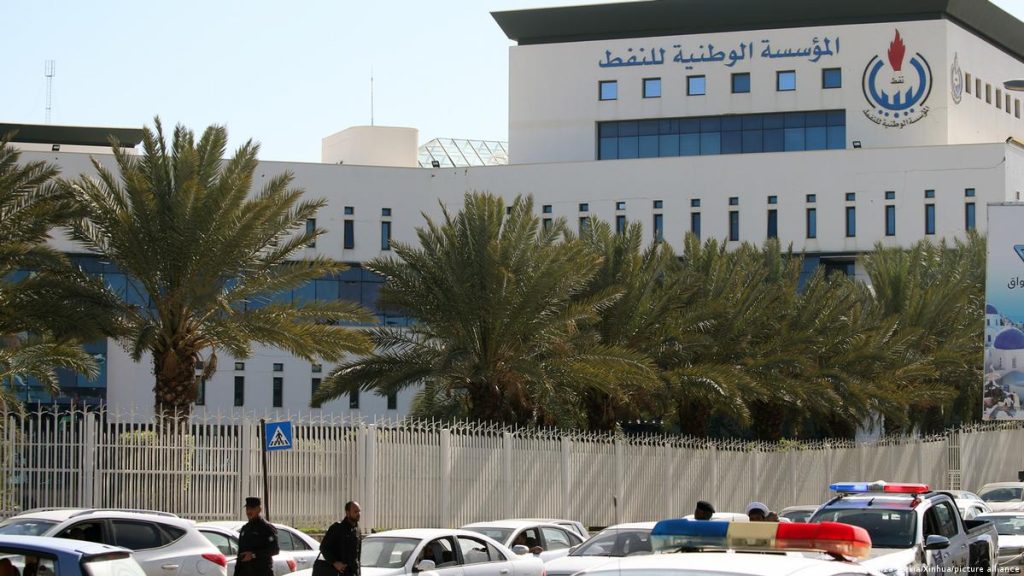
Tripoli, Libya — Libya’s National Oil Corporation (NOC) has signed three new production-sharing agreements with international energy companies, marking another major step in the country’s effort to revive upstream investment and increase oil and gas output after nearly two decades without a licensing round.
The agreements follow the conclusion of Libya’s first exploration bid round since 2007, which attracted significant interest from major international energy companies despite ongoing political and institutional challenges. The latest deals formalize exploration and development rights awarded earlier this year and signal growing confidence in Libya’s hydrocarbon sector.
NOC Chairman Masoud Suleman announced the agreements during a signing ceremony in Tripoli, describing the deals as an important milestone for Libya’s energy sector and a foundation for future investment and production growth. The agreements involve a group of international firms that secured exploration acreage during the licensing round, including companies from Europe, the Middle East, and North America. Industry observers view the signings as one of the strongest signals yet that Libya has re-emerged as a priority destination for upstream investment.
Foreign Investment Returns to Libya’s Upstream Sector
The agreements build on momentum generated by the licensing round announced in February, when NOC awarded exploration blocks to companies including Chevron, Eni, QatarEnergy, Repsol, Türkiye’s TPAO, Hungary’s MOL Group, and Nigeria’s Aiteo. The awards marked Libya’s first major upstream tender in nearly 19 years.
The winning companies secured both offshore and onshore acreage across the Sirte and Murzuq basins, as well as offshore Mediterranean blocks that contain significant oil and gas potential. Several awards involved consortium structures designed to share technical expertise, investment risk, and development costs.
The new production-sharing agreements convert those licensing awards into long-term contractual frameworks that govern exploration activity, future discoveries, and production development. For Libya, the agreements represent more than new exploration commitments. They demonstrate that major international companies remain willing to invest in the country despite political divisions and periodic disruptions that have affected the energy sector since 2011.
The return of global firms also reflects growing competition for new hydrocarbon resources as energy companies seek high-potential exploration opportunities in regions with existing infrastructure and proven reserves.
Libya holds Africa’s largest proven oil reserves and substantial natural gas resources, yet exploration activity remained limited for many years due to security concerns and regulatory uncertainty. Recent licensing activity suggests international operators increasingly view those risks as manageable when balanced against Libya’s resource potential.
Production Growth Remains the Central Objective
NOC has repeatedly stated that increasing production remains a strategic priority. The corporation aims to raise oil output while also expanding gas production to meet domestic demand and support future exports.
Recent developments support that objective. Libya announced several new oil and gas discoveries in partnership with Repsol, Eni, and Sonatrach earlier this year. NOC has also advanced infrastructure projects designed to improve gas utilization and increase export capacity. The latest agreements could help accelerate exploration activity across underdeveloped basins and potentially unlock new reserves that support long-term production growth.
International operators bring technical expertise, advanced seismic technology, drilling capabilities, and access to capital that Libya requires to maximize the value of its hydrocarbon resources. Many of the newly awarded blocks remain lightly explored compared with mature producing areas elsewhere in North Africa and the Middle East.
The agreements also arrive amid broader efforts by Libya to strengthen relationships with major energy companies. During the past year, the country has signed cooperation agreements and development deals involving firms such as TotalEnergies, ConocoPhillips, Chevron, BP, and Shell.
Analytical Outlook
The signing of three production-sharing agreements represents an important transition from licensing announcements to actual contractual commitments.
The immediate impact on production will likely remain limited because exploration programs require years of seismic work, drilling, appraisal, and development before generating commercial output. However, the agreements provide a clearer indication of investor confidence than licensing awards alone.
For Libya, the larger significance lies in restoring the country’s position on the global exploration map. International energy companies increasingly view Libya as one of the few remaining regions that combines large undeveloped reserves, relatively low production costs, and proximity to European markets.
Whether these agreements translate into substantial production growth will depend on political stability, regulatory consistency, and the ability of operators to execute exploration programs without disruption.
If those conditions hold, the agreements could mark the beginning of a new investment cycle for Libya’s oil and gas sector and strengthen the country’s role as a key supplier of crude oil and natural gas to regional and global markets.