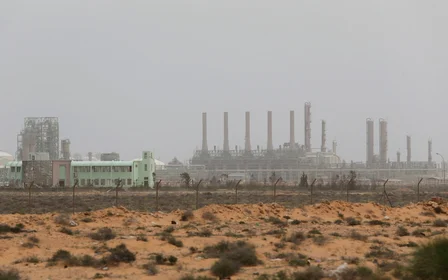
Libya’s National Oil Corporation (NOC) has regained full control of the Ras Lanuf refinery after buying back the shares held by UAE-based Trasta Energy in the Libyan Emirates Oil Refining Company (LERCO). The deal ends a long dispute that stalled one of Libya’s most strategic energy assets for more than a decade.
The agreement marks a major step in Libya’s effort to revive its downstream energy sector and cut its reliance on imported refined fuel. It also gives the NOC direct control over one of the country’s largest refining and petrochemical complexes in the Gulf of Sirte.
According to reports from Africa Intelligence and Reuters, the transaction settles years of legal and commercial conflict between both sides. The refinery has stayed mostly inactive since 2013 due to conflict, instability, and arbitration cases linked to the joint venture. LERCO originally formed as a partnership between Libya’s NOC and Trasta Energy, part of the UAE-based Al Ghurair Group. The project aimed to modernise and expand the Ras Lanuf refinery. The collapse of state authority after 2011 and repeated disruptions in Libya’s oil sector pushed the project into long-term stagnation.
The dispute later escalated into international arbitration. Earlier reports linked the case to claims that reached up to $1.8 billion. Instead of continuing prolonged legal battles, both sides now agreed on a settlement that returns Trasta’s shares to the Libyan state.
A Strategic Refinery Returns to Libyan Control
The buyout carries weight far beyond the legal settlement. Libya holds Africa’s largest proven oil reserves, yet it still imports large volumes of refined fuel because of weak domestic refining capacity. Years of conflict damaged infrastructure and delayed investment in downstream operations. By regaining full ownership of Ras Lanuf, the NOC now gains a chance to restart one of Libya’s most important industrial assets and rebuild part of its refining base.
The Ras Lanuf refinery has a capacity of around 220,000 barrels per day. The wider complex also includes petrochemical facilities, which adds further strategic value. Its coastal location in the Gulf of Sirte gives Libya direct access to Mediterranean shipping routes and European energy markets. NOC chairman Masoud Suleman stated that the refinery could restart within six to twelve months after maintenance work. Reports estimate rehabilitation costs at around $60 million. The facility is expected to initially process Amna crude once operations resume.
A successful restart would reduce Libya’s fuel import burden and improve domestic supply stability. It would also mark one of the most significant downstream recoveries in the country’s oil sector in years.
Libya Shifts Focus Toward Downstream Recovery
The Ras Lanuf deal also signals a broader shift in Libya’s energy strategy. For years, the country focused mainly on crude exports because upstream production delivered faster revenue. Downstream development received less attention. Global energy markets now place more value on refining capacity and petrochemical output. Libya’s NOC appears to be adjusting to that shift by prioritizing industrial recovery alongside crude production.
The refinery revival also comes at a time when Mediterranean energy routes carry growing strategic importance. Europe continues to look for nearby and stable energy suppliers after repeated global supply shocks. Libya holds a geographic advantage. It sits close to European demand centers and produces high-quality light crude. If the country restores refining capacity, it could strengthen its role not only as an exporter of crude oil but also as a regional supplier of refined products.
The agreement also reflects a change in Libya’s approach to foreign partnerships in critical infrastructure. Earlier models relied heavily on joint ventures with foreign firms. The new direction shows a stronger push toward direct national control of strategic energy assets.
Challenges Ahead for Ras Lanuf Restart
Despite the progress, major challenges remain. Restarting Ras Lanuf requires extensive technical rehabilitation, stable security conditions, and consistent policy coordination. Libya’s oil sector still faces periodic shutdowns and infrastructure risks. Any long-term success will depend on whether authorities can maintain operational stability and attract future investment without repeating past disputes.
Even so, the removal of long-standing legal and ownership barriers gives the NOC a clear path forward. The deal unlocks a strategic asset that has remained underutilized for more than a decade. For Libya, the Ras Lanuf refinery now represents more than an industrial site. It stands as a test of whether the country can rebuild parts of its energy system beyond crude exports and move toward a more balanced and resilient energy economy.