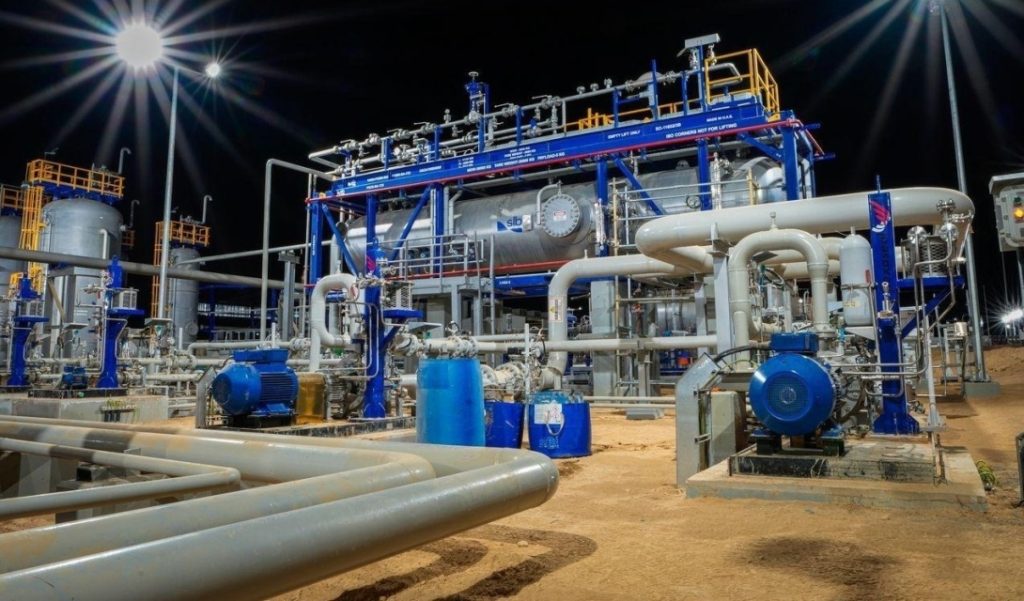
Libya’s National Oil Corporation (NOC) has announced the full resumption of operations at the Mabrouk oil field, marking another milestone in the country’s efforts to restore production capacity and rehabilitate critical energy infrastructure. The announcement follows the completion of maintenance, redevelopment work, and a trial production phase that tested the field’s operational readiness.
According to the NOC, production during the testing period reached around 30,000 barrels per day, while the field’s development plan targets an increase to 40,000 barrels per day. The company reported cumulative production of approximately 2.5 million barrels since trial operations began.
The return of Mabrouk represents more than the restart of a single oil field. It reflects a broader strategy by Libya’s energy sector to bring damaged assets back into production and increase output after years of conflict, shutdowns, and underinvestment.
Mabrouk Strengthens Libya’s Production Recovery
Mabrouk holds symbolic and economic importance for Libya’s oil industry. The field remained offline for years after suffering extensive damage during periods of instability. Recent rehabilitation efforts focused on restoring facilities, upgrading infrastructure, and rebuilding operational capacity before restarting production.
The successful restart adds new barrels to Libya’s production base at a time when the NOC seeks to raise national output and attract further investment into upstream projects. Recent months have seen increased activity across the sector, including renewed exploration programs, field redevelopment initiatives, and efforts to return dormant facilities to operation.
The NOC has repeatedly emphasized that restoring existing fields can provide faster production gains than developing entirely new projects. Mabrouk’s return illustrates that approach. By rehabilitating infrastructure that already exists, Libya can increase exports and revenues while limiting development timelines and costs.
The restart also arrives during a period of stronger financial performance for the NOC. The corporation recently reported approximately $4 billion in revenue during May, its highest monthly revenue level in a decade, highlighting the importance of stable production and exports to the country’s public finances.
What Mabrouk Means for Libya’s Energy Strategy
The reopening of Mabrouk fits into a wider effort to modernize Libya’s oil sector and improve operational reliability. Alongside field rehabilitation projects, the NOC has advanced plans to restart the Ras Lanuf refinery, expand gas developments, and strengthen cooperation with international energy companies.
For international markets, the additional production from Mabrouk will not significantly alter global supply balances. However, it reinforces Libya’s position as a source of incremental barrels at a time when traders continue to monitor geopolitical risks and supply disruptions across several producing regions.
For Libya, the impact is more substantial. Every additional barrel contributes to export revenues, foreign currency inflows, and government finances. The rehabilitation of fields such as Mabrouk also sends a signal to international investors that operational conditions in parts of Libya’s energy sector continue to improve.
Challenges remain. Libya’s oil industry still faces infrastructure constraints, political uncertainty, and periodic operational disruptions. Yet the successful return of Mabrouk demonstrates that production recovery projects can deliver tangible results when technical resources, funding, and institutional support align.
As Libya works toward higher production targets, the performance of rehabilitated fields like Mabrouk may prove just as important as new exploration campaigns. The country’s path to increased output will depend not only on discovering new reserves but also on maximizing the value of assets that already exist.